
Temporary construction fencing
Define the site boundary and access.
Temporary fencing uses movable panels to define a site boundary that may change as work progresses. HJ Fence presents temporary fence panels, crowd control barriers and temporary gates. Specify the complete arrangement, including panels, supporting components and access points, rather than panel quantity alone.
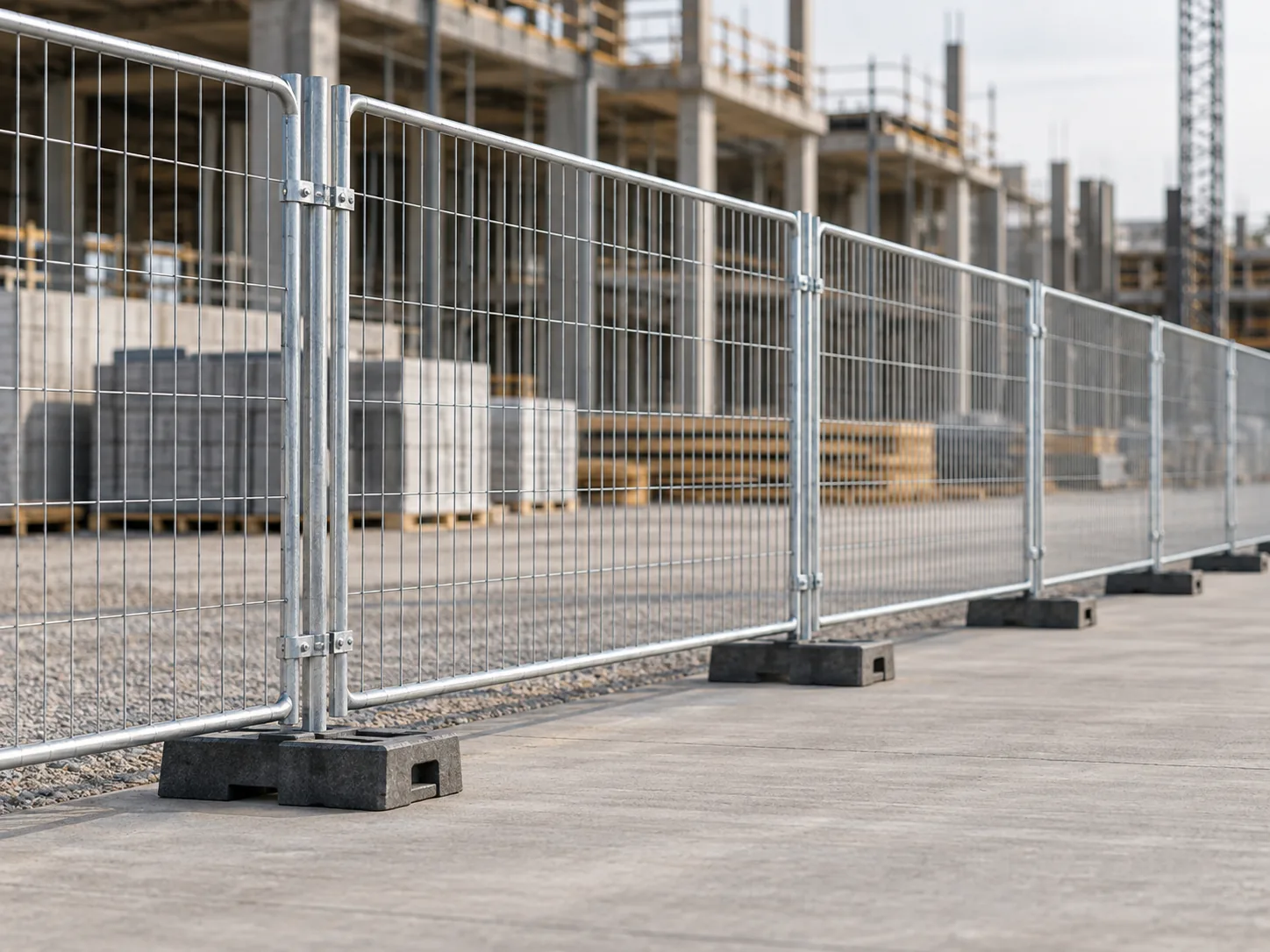
Details for an accurate discussion
Use this checklist to prepare your project brief. Confirm the required details with HJ Fence before selecting a configuration.
| Item | Information to provide |
|---|---|
| Site plan | Boundary length, panel height, corners, duration and planned relocation. |
| Panel details | Panel width and height, mesh or infill requirements and total quantity. |
| Bases and connectors | Base type, panel connection details and quantities for the complete layout. |
| Stability | Ground conditions, exposure, required bracing or anchoring and any screening. |
| Access | Pedestrian and vehicle gate positions, clear widths and operating needs. |
| Handling and delivery | Delivery destination, unloading arrangements, packing and storage needs. |
Before requesting a quotation
Mark entrances and pedestrian routes before counting panels. Include the supporting components in the inquiry and tell us if screening or signage will be attached. Stability and installation requirements must be checked for the actual site; do not assume that a panel image establishes a suitable installed arrangement.
Temporary Fencing questions
Are bases and connectors included with every panel?
Do not assume they are. Ask for the quotation to list panels, bases, connectors, gates and any other components separately, with the required quantities.
Can screening be added to temporary fencing?
Include that requirement at the inquiry stage. Screening changes the installed arrangement and needs to be considered with site exposure, supports and installation requirements.
How do temporary panels differ from crowd control barriers?
The first describes a movable site perimeter; the second describes a pedestrian control product direction. Select by intended use and confirm the required dimensions and complete layout.